Articles

Delta Vista Optometry Blog

Delta Vista Optometry Blog is your trusted source for informative articles, expert insights, and valuable tips related to eye health and vision care. Explore a wealth of knowledge on topics ranging from eye conditions, vision correction options, to maintaining optimal eye wellness. Stay informed and prioritize your eye health with our engaging and educational blog content.

Hybrid Contacts

Hybrid Contacts

Contact lenses have become a popular choice for individuals who want to correct their vision without the hassle of wearing glasses. Traditional contact lenses have been around for decades, offering a convenient alternative to eyeglasses. However, advancements in technology have given rise to a new type of contact lens – hybrid contacts.
 

What Are Hybrid Contacts?

Hybrid contacts are a revolutionary type of contact lens that combine the best features of both soft and rigid gas permeable (RGP) lenses. The rigid center corrects vision by providing precise clarity, while the soft skirt offers comfort and stability. This unique combination allows for the benefits of both types of lenses to be experienced simultaneously.

The central RGP lens of a hybrid contact is made from a rigid material that allows oxygen to pass through to the cornea, ensuring ample oxygen supply to the eyes. This ensures the overall health of the eyes, preventing dryness and reducing the risk of complications associated with limited oxygen flow.
Read more
Medmont Topography

Medmont Topography

When it comes to diagnosing and managing complex vision conditions, precision matters. One of the most advanced tools is Medmont topography - a state-of-the-art technology that provides highly detailed maps of the cornea. Whether you are being evaluated for specialty contact lenses, dry eye treatment, or refractive surgery, Medmont topography plays a critical role in delivering accurate, customized care. 


What Is Medmont Topography? 

Medmont topography refers to corneal imaging performed with the Medmont E300 Corneal Topographer, a diagnostic device designed to capture detailed curvature measurements of the cornea. 

Using advanced Placido disc technology, the system projects illuminated rings onto the cornea and analyzes their reflections. From this data, it generates a color-coded map that reveals the shape, elevation, and curvature of the cornea with exceptional accuracy. 
 

Why Is Corneal Topography Important? 

The cornea is responsible for approximately two-thirds of the eye’s focusing power. Even subtle irregularities can significantly affect vision. Medmont topography allows your eye doctor to detect and monitor: 

  • Keratoconus and other corneal ectasias

  • Corneal irregularities or scarring

  • Post-surgical corneal changes

  • Astigmatism patterns

  • Contact lens fitting complications

  • Early signs of corneal distortion 


Because it provides highly detailed imaging, Medmont topography often identifies changes long before they become noticeable in a routine vision exam. 
 

How Medmont Topography Improves Contact Lens Fitting 

For patients who require specialty contact lenses - such as scleral lenses, hybrid lenses, or lenses for keratoconus - precise corneal mapping is essential. 

  • The Medmont system offers: 

  • High-resolution curvature data

  • Wide corneal coverage

  • Repeatable, reliable measurements

  • Advanced software analysis 
     

This allows your doctor to design and fit custom lenses with greater accuracy, improving comfort, stability, and visual clarity while reducing trial-and-error fittings. 

Read more
Atropine Drops

Atropine Drops

Myopia is a common vision problem affecting a large number of individuals worldwide. It occurs when the eye is unable to focus properly on distant objects, resulting in blurred vision. Myopia can develop during childhood and progress into adulthood if left unmanaged.
 

What Causes Myopia to Develop?

Myopia can be caused by a combination of genetic and environmental factors. If one or both parents have myopia, there is a higher chance that their children will develop the condition. Additionally, excessive screen time, lack of outdoor activities, and prolonged near-work activities such as reading or using electronic devices can contribute to the development of myopia. These lifestyle factors can lead to the elongation of the eyeball, resulting in the inability to focus on distant objects.
 

The Importance of Myopia Management

Managing myopia is crucial to prevent its progression and associated complications. High levels of myopia can increase the risk of developing eye conditions such as glaucoma, cataracts, and retinal detachment.

Additionally, severe myopia can lead to vision loss and significantly impact the quality of life. Early intervention and proper management of myopia can help slow down its progression and reduce the risk of these complications.

Read more
Telemedicine

Telemedicine

Telemedicine makes it easier to connect with your optometrist when an in-office visit is not necessary or not possible. A virtual eye care appointment allows you to discuss certain eye health concerns, follow-up needs, and symptoms through a secure video visit from home, work, or another private location.

All you need is a smartphone, tablet, or computer with a camera, microphone, and internet connection. The team will provide instructions before your appointment so you know what to expect and how to join your virtual visit.

How A Virtual Eye Care Visit Works

To schedule a telemedicine appointment, call our office or request an appointment online. Before confirming your visit, we may ask a few questions about your symptoms, medical history, and current eye care concerns. This helps us determine whether a virtual visit is appropriate or if you should be seen in person.

During your appointment, your optometrist will review your concerns, ask about your symptoms, and may guide you through simple observations or questions to better understand what is happening. In some cases, photos of the eye or eyelid may be helpful if they are clear and taken safely.

Read more
Optomap

Optomap

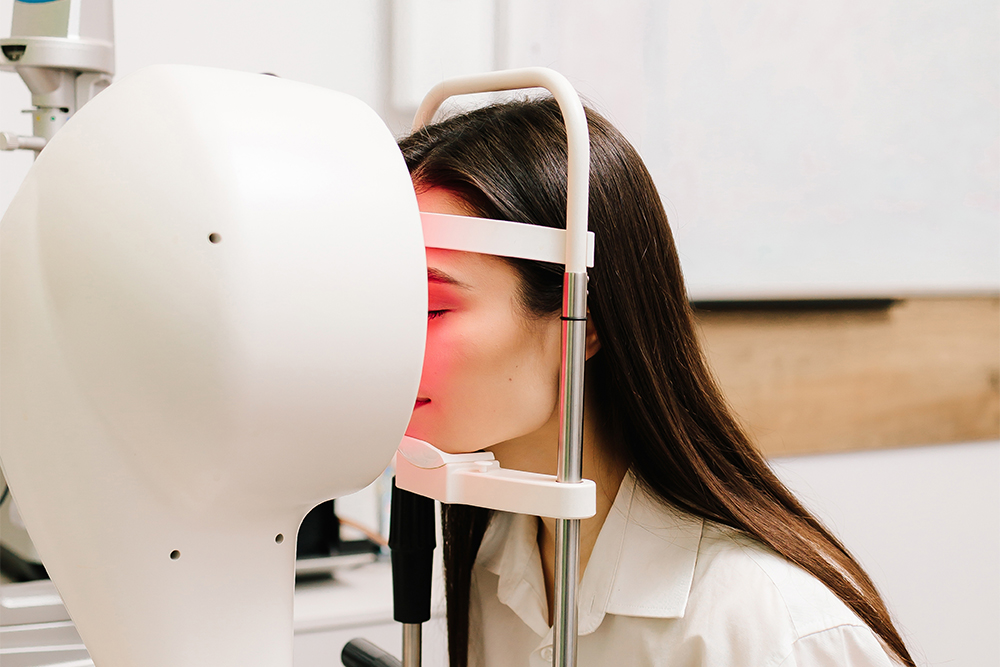
Optomap is an innovative new technology that gives eye doctors the ability to perform ultra-wide retinal imaging that is far superior to what can currently be achieved using conventional retinal imaging options. In contrast to conventional retinal imaging, Optomap captures at least 50% more of the retina in a single capture, and with Optomap’s multi-capture function, up to 97% of the retina can be viewed. This gives eye care professionals greater opportunity to monitor the health and condition of patient vision.
 

Why is Optomap important?

Optomap is another great preventative eyecare technology tool. By allowing your eye doctor to have a comprehensive view of your retina, they will be able to detect any developing eye diseases early on, before they have a detrimental impact on your vision and day to day life. Not only can Optomap detect eye conditions such as retinal holes, retinal detachment, macular degeneration and diabetic retinopathy, but it can also be used to identify some general health conditions such as cardiovascular disease, stroke and cancer.

Read more
Neuro-Optometric Rehabilitation

Neuro-Optometric Rehabilitation

Neuro-Optometric Rehabilitation

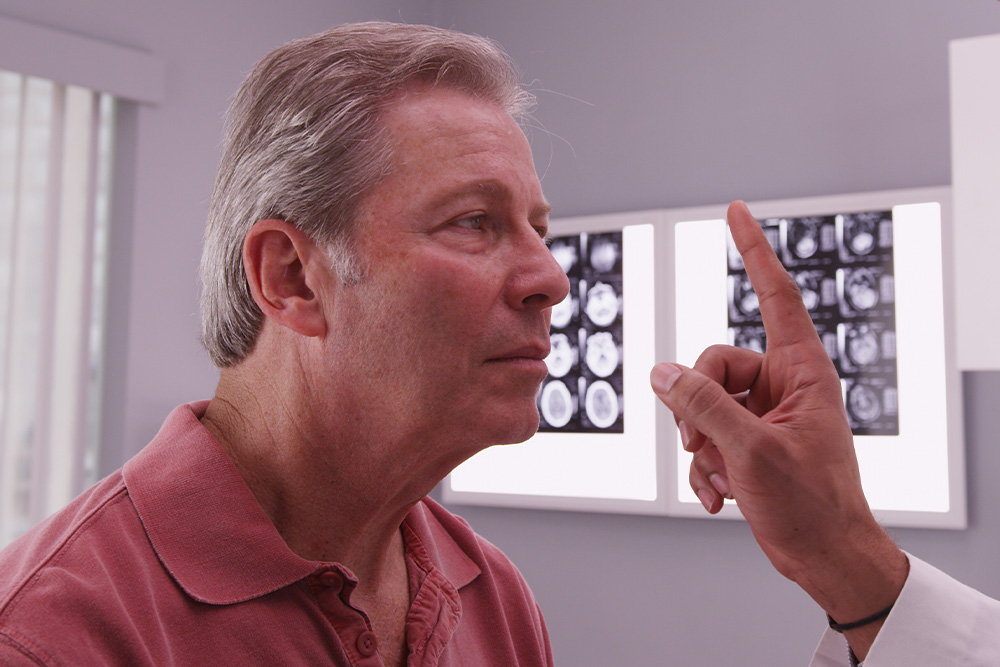
When most people think about vision problems, they picture issues with the eyes themselves. However, many visual difficulties actually begin in the brain. After a concussion, stroke, or other brain injury, the connection between the eyes and brain can be disrupted - causing symptoms that affect balance, reading, focus, and even daily comfort.
 

Brain Injuries and Vision

Your visual system is complex - about 70% of the brain is involved in vision processing. After a traumatic brain injury (TBI), concussion, or neurological event such as a stroke, the pathways that coordinate eye movement, focus, and perception can become impaired.

This can result in symptoms such as:

  • Blurred or double vision

  • Eye strain and headaches

  • Difficulty reading or focusing

  • Dizziness or balance problems

  • Light sensitivity

  • Problems with depth perception
     

These visual issues often persist long after other symptoms of a brain injury have improved, making specialized vision care essential for recovery.
 

What Is Neuro-Optometric Rehabilitation?

Neuro-optometric rehabilitation is a specialized form of vision therapy designed to retrain how the brain and eyes work together. Unlike traditional eye care that focuses on eyesight alone, this therapy targets the neurological processes behind vision. Our doctor evaluates how the eyes and brain communicate and creates a personalized treatment plan to rebuild these visual pathways. The goal is to restore comfort, coordination, and clarity - improving overall visual function and quality of life.

Read more
Specialty Contact Lenses

Specialty Contact Lenses

Every patient is different and so are their eyes. This means that there need to be different types of contact lenses to suit each individual. Some patients have corneal abnormalities which mean that conventional lenses won’t sit comfortably on the surface of their eyes, while others suffer from eye conditions that mean normal contact lenses won’t be comfortable or could irritate their eyes. 

As you may have guessed from the name, specialty contact lenses are unconventional contacts that are designed for patients that regular contacts might not be suitable. Here are some of the main types of speciality contact lenses and who they are recommended for. 
 

Who might be a good patient for specialty contact lenses?

Some of the patients that might benefit from specialty contact lenses include those who:

  • Have been diagnosed with dry eye syndrome

  • Have corneal scarring

  • Have been diagnosed with keratoconus, a condition characterized by the bulging of the cornea

  • Suffer from strabismus, a condition where the patient has an eye that turns in or out relative to the other

  • Have suffered an injury to the eye

  • Suffer from a peripheral corneal thinning disorder

  • Are intolerant to other types of lenses
     

Your eye doctor or contact lens provider will be able to tell you if you need specialty contact lenses and if so, which lenses would be best based on your individual requirements.

Read more
Stellest Lenses

Stellest Lenses

In September 2025, the FDA approved Stellest lenses for children ages 6 to 12 to correct and manage myopia, a major milestone for myopia care. These lenses have been successfully used in countries across Europe, Canada, and Asia since 2020, showing promising results in slowing eye growth associated with myopia.
 

The Importance of Early Myopia Management

Myopia typically begins in early childhood, often between the ages of 6 and 10, and tends to worsen quickly during the school years as children spend more time reading and using digital devices. The sooner it begins, the higher the risk that it will progress to more severe levels. Every increase in myopia level significantly raises the risk of eye health complications later in life, such as retinal detachment or glaucoma.

By beginning myopia management as soon as possible, parents can help slow eye growth and protect long-term vision. With innovative options like Stellest lenses, families now have effective, science-backed solutions to take control of their child’s myopia.
 

What Are Stellest Lenses?

Stellest lenses are a groundbreaking innovation in myopia control, developed by Essilor. They look like regular eyeglass lenses but are designed with specialized optical technology to both correct vision and slow the progression of myopia.

Read more
MiBo Thermoflo

MiBo Thermoflo

Dry eye is a common condition that affects millions of people worldwide. It occurs when the eyes do not produce enough tears or when the tears evaporate too quickly. This can lead to discomfort, irritation, and even vision problems. If you are suffering from the discomfort of dry eye, MiBo Thermoflo can offer you a revolutionary solution.
 

Understanding the Causes of Dry Eye

Dry eye is a condition that occurs when the eyes do not produce enough tears or when the tears evaporate too quickly. There are several factors that can contribute to this condition, including environmental factors, certain medications, and aging. Environmental factors such as dry or windy climates, air conditioning, and excessive screen time can all worsen dry eye symptoms. Additionally, certain medications like antihistamines, decongestants, and diuretics can decrease tear production. Aging is also a common cause of dry eye, as tear production naturally decreases as we get older.

Meibomian gland dysfunction (MGD) and blepharitis are two common conditions that can contribute to the development of dry eye. MGD occurs when the meibomian glands, which are responsible for producing the oily layer of tears, become blocked or dysfunctional. This can lead to an inadequate amount of oil in the tears, causing them to evaporate too quickly. Blepharitis is an inflammation of the eyelids that can disrupt the normal functioning of the meibomian glands.

Read more
 
Helpful Articles
all eye care services
All Eye Care Services

Find personalized eye care excellence with our comprehensive services. From eye exams to advanced diagnostics, trust us for all your vision needs.

contact us
Keep In Touch

For non-urgent questions or to learn more about our services, contact us today!